

I replaced the accumulator about 2 months ago as the car had the typical symptoms. When I removed the unit from the regulator (the first time with the regulator still in the car) a small check valve fell out. Upon subsequent removal of the regulator the check valve, with a deteriorated O ring was reinstalled with an O ring that I felt was approriate. The symptoms of a bad brake bomb reappeared.
Thinking that the check valve/O ring could be the culprit, I obtained a used regulator (from a member of our forum) and installed it with the recently acquired accumulator now about 3 months old. Yesterday, I took the car out and the symptoms are back. Although I think it's a long shot, I'm coming to the conclusion that the (new) accumulator (purchased from Autohaus) is the cause. Has anyone experienced a bad accumulator out of the box? I am at a loss in determining the cause of this issue.
Brake Bomb Befuddlement
-
rlomba8204
- Posts: 4869
- Joined: Feb 12, 2006
- Location: Washington, DC
No, I haven't and Autohaus is pretty reputable. That being said, I help out with the local CCA DIY program and at least amongst the shops with which we work, the sense is that parts not from BMW, even OEM stuff, are significantly more suspect than used to be the case. Too many seconds and crap from China, combined with plentiful Internet channels for distribution. So return it for another one or pay more at BMW. Those are your options.
Typical symptoms of a failed accumulator are feeling like there is a brick under the pedal on panic stops. Normal feel with normal driving, but when you do sudden application the pedal will be rock solid with no assist. You can also test it by pumping the pedal with the car off, you should get at least half a dozen pumps before the pedal gets hard.strokez wrote:what are "typcial symptoms"?
So Autohaus made the return and replacement of the accumulator very easy. I highly recommend them.
But now I'm back to where I started, I've replaced the accumulator twice and the regulator once (with a used one from a forum member who said it came out of a car that functioned fine) and I still have the dreaded pedal that doesn't work like it should.
I'm out of ideas here and am asking for assistance. I don't like driving this car like it is so I must resolve this. Can anyone either give me a different direction to investigate or as a last resort point me to someone n New England who may be familiar with our cars and can assist me.
But now I'm back to where I started, I've replaced the accumulator twice and the regulator once (with a used one from a forum member who said it came out of a car that functioned fine) and I still have the dreaded pedal that doesn't work like it should.
I'm out of ideas here and am asking for assistance. I don't like driving this car like it is so I must resolve this. Can anyone either give me a different direction to investigate or as a last resort point me to someone n New England who may be familiar with our cars and can assist me.
So I decided to email Mike Miller, BMWCCA's Tech Talk editor. Mike stated that the pressure regulator switches should always be replaced when the accumulator is replaced. Since this was a relatively easy (and inexpensive) potential solution, I obtained the switches and installed them. I now have a flickering brake light as well as a check engine light I did not have before. And the original problem has not been resolved.
My next step is to perform the pressure tests outlined in the Bentley manual ( I should have done this initially). However before I do, I would like to verify that the wires connecting to the pressure switches are connected properly and ask the board again if anyone may have any clues as to how I may resolve this issue.
I have attached a picture of the wiring and in case it is not clear, the top switch has two wires going to it, one set of 2 brown connected to a single spade connector and another set of 2 wires, one brown/blue and the other grey/blue, both connected to another spade connector. In among the wiring leads going to the top switch there is an unused dual lead consisting of a brown and a blue wire.
The side switch has a single brown wire and a single grey wire going to each spade connector. In among the wiring leads is an unused brown/blue lead.
Can anyone verify that these wires are connected properly?
Thanks for any help.
http://e28-535i.com/upload/IMG_5826.JPG
http://e28-535i.com/upload/IMG_4484.JPG
My next step is to perform the pressure tests outlined in the Bentley manual ( I should have done this initially). However before I do, I would like to verify that the wires connecting to the pressure switches are connected properly and ask the board again if anyone may have any clues as to how I may resolve this issue.
I have attached a picture of the wiring and in case it is not clear, the top switch has two wires going to it, one set of 2 brown connected to a single spade connector and another set of 2 wires, one brown/blue and the other grey/blue, both connected to another spade connector. In among the wiring leads going to the top switch there is an unused dual lead consisting of a brown and a blue wire.
The side switch has a single brown wire and a single grey wire going to each spade connector. In among the wiring leads is an unused brown/blue lead.
Can anyone verify that these wires are connected properly?
Thanks for any help.
http://e28-535i.com/upload/IMG_5826.JPG
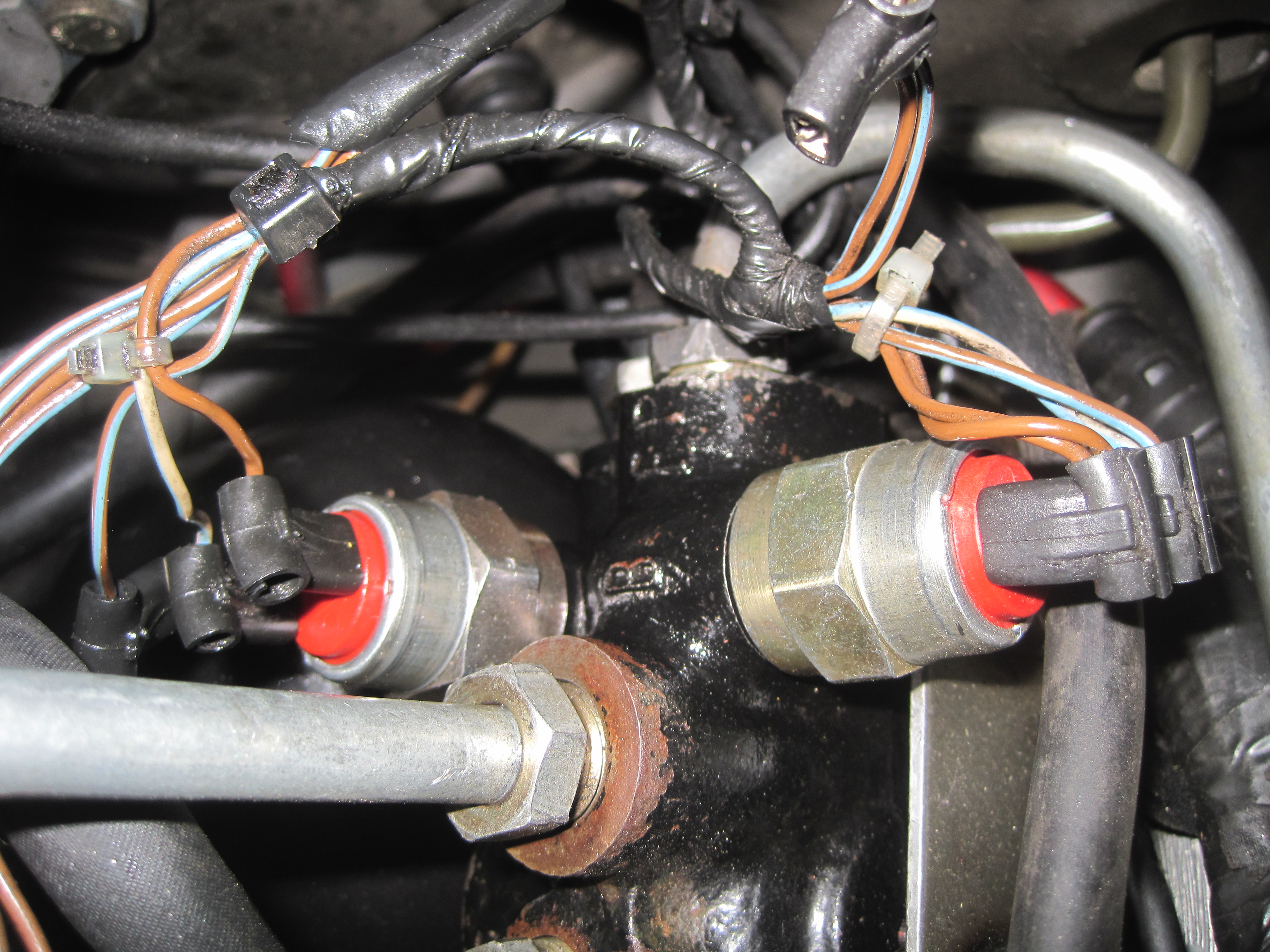
http://e28-535i.com/upload/IMG_4484.JPG

The fluid systems are isolated, but a failed N2 sphere is detected through the feel of the brake pedal...maybe wasted time but I have always bled the brakes after 'bomb' replacement. Just a thought - I do have bad ones sometimeLubehead wrote:Thank you for your reply LA. The brakes fluid system is separate from the accumulator system which uses the ATF provided by the power steering pump. There is no relationship to the problem (occasional no assist/hard pedal) to a brake system that is in need of bleeding.
