

Right, but the new requirement to insure those with pre-existing conditions forces the insurer to write that policy at a standard rate.Hutch wrote:Lets put it a different way, if you knew that I was going to total my $20,000 car tomorrow, how much would you charge me for insurance today?
I think you would be uninsured...
I love when science confirms common sense.

-
spinedocab
- Posts: 2600
- Joined: Feb 12, 2006
- Location: Upper Bucks County, PA
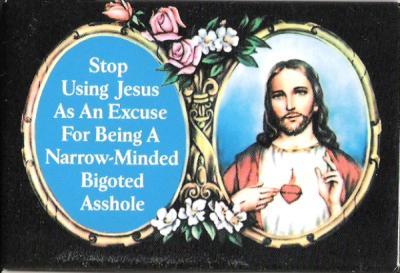
Science and Common Sense?
I was talking to a friend of mine this morning who is a huge Ford Mustang guy. Well, I mentioned this thread to him and he said, wow, we got the same thing going on our mustang forum. Go figure...
-
rlomba8204
- Posts: 4869
- Joined: Feb 12, 2006
- Location: Washington, DC
I wanted to respond one more time because I feel genuinely bad about what I think is misunderstanding and I don't want it to lead to hard feelings. I think you’re a good guy, and I don’t think you or anyone else is a bigot of any sort, but bear with me a few minutes while I try to sort through why you got the response from me that you did. And please bear in mind I am not trying to convince you to change your beliefs in any sense, I am just trying to urge you to give a little space to others, and I think / hope the specifics of that will be clear shortly.The point here is not to debate with you further, or more importantly to argue, but rather to give you a better sense of what is behind my statements so that you understand it is not motivated by any personal animus.Tammer in Philly wrote:A perfect example of the effect of religious belief on the misguided and weak of mind. Here, it provides a convenient front for the obvious bigotry of the individual (cf his earlier emails regarding the President's wife):
http://www.dailymail.co.uk/news/article ... ident.html
-tammer
That intro aside, to your main point, I think I understand it and it’s pretty straightforward: that there is abuse of religion and that people who claim to be religious do many screwed up things in the name of religion or God. I also take your point that many of these folks are hypocrites. If that’s the thrust of what you’re saying we don’t disagree.
But here’s the thing, and here’s why I find myself defending people who, for example in the case of creationism, with whom I don’t agree. Remember the point I made about whether a free society means respecting religious differences (or not having a religion) or whether it means essentially banning God? It’s not an academic point, and it’s not about me wanting to make sure that there’s a nativity scene in front of the post office (I don’t care if there is or is not one.) For me, the reason I think it is important NOT to completely ban God is because while it is like shooting fish in a barrel to point out how all the great religious faiths have been abused by lunatics throughout the centuries -- Islam is now only the latest, look at Christianity during the Crusades and the Middle Ages -- it is also important from a legal philosophy perspective to have a God, because in my view (and I understand you may disagree) it provides the lynchpin of having a just society -- a society that respects life, a society that helps the less fortunate, a society that is essentially decent.
To better illustrate what I mean here, it is only necessary to survey the history of the 20th century. Look at the barbarity and atrocities committed by the worst regimes of the last 100 or so years: the Soviets, the Nazis, etc. Look at some of the horrific things that go on in communist China, particularly with respect to the child-bearing policies. Look at North Korea. Look at Iraq -- if Hussein were actually a real Muslim instead of a nationalist using religion to advance his agenda he would never have committed the atrociities that he did. The point is that I think it is fairly non-controversial to say that these regimes were engaged in the worst human rights abuses in recent memory -- basically a complete lack of respect for human life, which is essentially the underpinning of all law -- and what do all of them share in common? The banishment of God and the replacement with the “State” or some supreme leader. The result is predictable and inevitable: human beings are a means to whatever goal the state envisions. Life is not respected, and neither is the dignity of human beings.
Now go back for a minute to your completely legitimate point about religious abuses -- the treatment of women in Saudi Arabia today or by the Taliban. Look at some of the bigotry in our country that you cite -- let’s assume for the sake of argument it is all true. Then let me ask you this: would you rather be a woman today in Saudi Arabia or a solider in 1943 on the front lines of the Red Army? Would you rather be a woman today in Saudi Arabia or a Jew in Nazi Germany? I don’t want to in any sense diminish the legitimacy of your point with respect to the abuses of religion, but I guess my point is we need to try to correct those abuses -- do a better job of having people read Aquinas for starters -- than to simply banish religion and God. Stated differently, and more importantly, the society that has an imperfect or even pretty screwed up view of what God wants (Saudi Arabia, in our example) is a far safer, in terms of its basic respect for human life, than one with no God, or one that refuses to contemplate / acknowledge the existence of God. That’s my first point -- the reason I tend to “stick up” for religiously conservative people is because while in many respects I disagree with them doctrinally, I also think they serve as a useful counterweight / foil to those on the other side who are more dangerous, in my view, because they want to completely ban God from the public square. You may disagree with me on the necessity of a God as a prerequisite for any concept of just or moral law, but I think the historical examples are on my side, in terms of what is the greater / lesser evil.
Second point I want to make is about the appropriateness of religious convictions manifesting themselves in policy preferences and policy debates. A lot of people, perhaps you as well, seem to make the point that, for example, a candidate like Rick Santorum using his religion as a basis to say that rape victims should not be permitted abortions is inappropriate because the person, in this case Santorum, is injecting his religious beliefs inappropriately into a public policy decision. I’ll take your point that, as a practicing Catholic even, I find Santorum’s prescription a tough pill to swallow in this instance.
That being said, I think there is a tendency amongst people on your side of the political spectrum to try to “domesticate” religion and put it up on a shelf somewhere. What I mean by that is that religion is fine when it does not pose policy outcomes counter to the prevailing “enlightened” beliefs of popular society. So, for example, if the Catholic Church teaches us to help the poor, or that the war in Iraq is not appropriate, those teachings are acceptable and non-controversial because they generally gibe with the politics of Jon Stewart and people of his ilk. And the holders of such beliefs are thus not cast as “religious extremists” or “religious fanatics” or another similar descriptive because their beliefs are in keeping with the appopriate dogma.
But if the Catholic Church, and practicing Catholics, oppose something that I think is pretty objectively horrible to most people, say late term abortion, then a candidate stating opposition to such a practice on moral grounds would, based on what I commonly read, be accused of inappropriately injecting religion into the political arena. The point is that you and I, and people similarly situated, have a foundational disagreement about the necessity of a God in order to have a just society and just laws -- to respect the basic liberty of the individual as a free person, in other words. I think that such a nexus is necessary, for me the question is where to draw that line so that people who believe differently can practice, or not practice, as they think appropriate. For you, because you come to the debate from a different perspective, any outward manifestation of religion as a policy preference will for the most part draw the critique that it is inappropriate expression, and, because pointing out imperfection in humans is like, once again, shooting fish in a barrel, draw the critique that the exponent of such a belief is in some fashion a hypocrite, thereby allowing you to diminish the person’s stature, and more importantly the stature of the person’s argument / belief.
The point here is not for me to argue with you for sake of arguing and to convince you I am right -- that’s the fool’s errand because people only come to these things on their own -- but rather to urge you to recognize and respect the fact that because you come to the view of law from a very different perspective than those people who believe in God, that oftentimes if not always you will see any outward manifestation of faith as a policy choice as a suspect, inappropriate manifestation of religion when it contradicts your own views. That’s not befitting someone who is a truly intelligent and liberal, in the sense of classical liberal -- and I believe you to be those things. For people on my side of this divide, the struggle, and it is not an easy one or in any sense a bright line, is to find a way to honor religious traditions but do so in a respectful and liberal -- again in the sense of classical liberal -- manner that respects the views of other non-believers -- to make sure we don't force our faith on people who don't share it.
This isn’t easy stuff, in other words
 and given how tough it is we all need to be very judicious and sparing in our criticism of one another. So to the extent I was harsh or ill-tempered, you have my apologies. But at the same time, I would respectfully request you lay off the critiques of religious idiots -- rest assured that those of us on my side see that for what it is.
-
Tammer in Philly
- Posts: 10719
- Joined: Feb 12, 2006
- Location: CHI, IL
Ray, I appreciate the well thought-out response. You very correctly identified the root difference in our thinking, namely whether or not one believes morality exists without religious grounding.
To that, I'll simply offer a couple of brief thoughts. If your view of that is accurate, then there should never be an example of a moral atheist or of a consistent value system shared by people who are not adherents of one of any devotional religion (that is, any religion which has a deity). It should be apparent that neither of those conditions is true, and in fact non-devotional Buddhism is probably one of the better examples of a moral philosophy that has absolutely no reliance on divinity, worship, afterlife, etc. to give it weight or merit. So we can happily disagree about the importance of religious faith in general for the attainment of moral "enlightenment," if you want to call it that, but given that virtually all human societies regardless of background converged on a very similar set of rules to govern societal structure and interpersonal interactions, I am more of the opinion that pragmatism and basic human compassion are the major factors. Note: this doesn't automatically imply a view of cultural or moral relativism, which is a common but unfounded assumption.
To clarify one point that you seemed to imply, I am patently not for the banishment of religion from society or even from political leaders. What I am against is the imposition of rules that are both sourced from religion and arbitrary on people who are not adherents of the source religion. That sounds confusing, so I'll give an example:
Murder, theft, rape, and similar crimes are all against the rules of virtually every religion. However, those rules are not arbitrary in a societal sense; they are necessary for society to function and, unsurprisingly, those actions are/were illegal in virtually every society that has ever existed. On the other hand, rules regarding standards of clothing or dietary choice or what constitutes a suitable marriage are found in many religions, but from a societal perspective they are completely arbitrary. Leviticus says to not eat shellfish, but many cultures and people have eaten shellfish for millennia with no problems. So, people who are not believers in the divinity of the Old Testament should never be banned from eating shellfish, even if orthodox Jews gained complete control of the government and set the laws. It's a ridiculous example, but I think it makes my point. Rules against gay marriage, rules requiring women to cover their heads, rules banning the consumption of pork, etc. are all projections of arbitrary religious doctrine onto non-believers and should not figure into the public discourse at all. That is where the line is for me. If the only motivation for a rule is "the Book says so," then it holds no legal water. If the Book says so and it happens to fall in line with a greater social contract, then that is fine--but the primary justification for a law is NOT the Book.
You mentioned abortion in your post. That's the one truly sticky one in terms of my "standard," but it also has nothing to do with religion. It has to do with the definition of what constitutes an individual with individual rights, and frankly that's not a discussion I want to get into here because by definition it is a completely grey area and each individual is entitled to his own opinion. That said, once an agreement is reached about when the individual exists as such, the laws governing treatment of that individual do not, in my opinion, need the backing of some deity or other to be judged good or bad.
I hope that clarifies my position somewhat. My major problem with the increasing influence of a particular brand of religion in US politics in the last 20 years is that it subjugates some people to the arbitrary views of a belief system they do not adhere to, and--more sinister--it actively discourages political subjects from applying critical thought to their decision making and selection of candidates, making such things a matter of faith instead of logic. It's another form of identity politics, and a particularly powerful one, and that is never a good thing (as you implied with your mention of Nazi Germany). Finally, I am very strongly opposed to a religious litmus test for political leaders, as I am opposed to revisionist history falsely according religious beliefs to the founding fathers which they did not hold.
And now that we've both invoked Hitler, this thread can officially end. ;-)
-tammer
To that, I'll simply offer a couple of brief thoughts. If your view of that is accurate, then there should never be an example of a moral atheist or of a consistent value system shared by people who are not adherents of one of any devotional religion (that is, any religion which has a deity). It should be apparent that neither of those conditions is true, and in fact non-devotional Buddhism is probably one of the better examples of a moral philosophy that has absolutely no reliance on divinity, worship, afterlife, etc. to give it weight or merit. So we can happily disagree about the importance of religious faith in general for the attainment of moral "enlightenment," if you want to call it that, but given that virtually all human societies regardless of background converged on a very similar set of rules to govern societal structure and interpersonal interactions, I am more of the opinion that pragmatism and basic human compassion are the major factors. Note: this doesn't automatically imply a view of cultural or moral relativism, which is a common but unfounded assumption.
To clarify one point that you seemed to imply, I am patently not for the banishment of religion from society or even from political leaders. What I am against is the imposition of rules that are both sourced from religion and arbitrary on people who are not adherents of the source religion. That sounds confusing, so I'll give an example:
Murder, theft, rape, and similar crimes are all against the rules of virtually every religion. However, those rules are not arbitrary in a societal sense; they are necessary for society to function and, unsurprisingly, those actions are/were illegal in virtually every society that has ever existed. On the other hand, rules regarding standards of clothing or dietary choice or what constitutes a suitable marriage are found in many religions, but from a societal perspective they are completely arbitrary. Leviticus says to not eat shellfish, but many cultures and people have eaten shellfish for millennia with no problems. So, people who are not believers in the divinity of the Old Testament should never be banned from eating shellfish, even if orthodox Jews gained complete control of the government and set the laws. It's a ridiculous example, but I think it makes my point. Rules against gay marriage, rules requiring women to cover their heads, rules banning the consumption of pork, etc. are all projections of arbitrary religious doctrine onto non-believers and should not figure into the public discourse at all. That is where the line is for me. If the only motivation for a rule is "the Book says so," then it holds no legal water. If the Book says so and it happens to fall in line with a greater social contract, then that is fine--but the primary justification for a law is NOT the Book.
You mentioned abortion in your post. That's the one truly sticky one in terms of my "standard," but it also has nothing to do with religion. It has to do with the definition of what constitutes an individual with individual rights, and frankly that's not a discussion I want to get into here because by definition it is a completely grey area and each individual is entitled to his own opinion. That said, once an agreement is reached about when the individual exists as such, the laws governing treatment of that individual do not, in my opinion, need the backing of some deity or other to be judged good or bad.
I hope that clarifies my position somewhat. My major problem with the increasing influence of a particular brand of religion in US politics in the last 20 years is that it subjugates some people to the arbitrary views of a belief system they do not adhere to, and--more sinister--it actively discourages political subjects from applying critical thought to their decision making and selection of candidates, making such things a matter of faith instead of logic. It's another form of identity politics, and a particularly powerful one, and that is never a good thing (as you implied with your mention of Nazi Germany). Finally, I am very strongly opposed to a religious litmus test for political leaders, as I am opposed to revisionist history falsely according religious beliefs to the founding fathers which they did not hold.
And now that we've both invoked Hitler, this thread can officially end. ;-)
-tammer
-
rlomba8204
- Posts: 4869
- Joined: Feb 12, 2006
- Location: Washington, DC
Two thoughts, one serious but non-argumentative (I think):
Best regards -- any more on this will have to be continued over beers or something. R-
Technically, that is not a grounds for ending the debate because we didn't accuse each other of being Nazis, rather we invoke Nazism as a historical analog.Tammer in Philly wrote:And now that we've both invoked Hitler, this thread can officially end.
I don't think you want to ban religion -- I want to be clear on that to avoid any hard feelings. Here's the problem, and it's the "sticky wicket" and comes up with all tough moral / philosophical issues in the law: what's the appropriate level of specificity for the application moral beliefs? The founders contemplated the existence of a God -- "all men are endowed by their Creator with certain inalienable rights . . . ." Problem is that certain problems, whehter it be abortion, or the death penalty, or gay marriage, invoke moral principles for certain people and it makes that issue we discussed earlier -- how do you honor religious traditions but not beat people over the head with your own -- really difficult. I don't want to belabor the point and again I don't want to try to argue with you but there are certain issues that by their very nature appeal to the moral underpinnings of law for resolution, and because people have different views of the appropriate role of God (or no role) with respect to such underpinnings, their views will be set accordingly. That's why we need to understand and respect where we come from on these issues because the only way to deal with them is to take the temperature down and think about them calmly. Distrust, anger, suspicion, etc. are all antithetical to reaching any sort of satisfactory resolution.Tammer in Philly wrote:To clarify one point that you seemed to imply, I am patently not for the banishment of religion from society or even from political leaders. What I am against is the imposition of rules that are both sourced from religion and arbitrary on people who are not adherents of the source religion.
Best regards -- any more on this will have to be continued over beers or something. R-
Ray --rlomba8204 wrote:I don't think you want to ban religion -- I want to be clear on that to avoid any hard feelings. Here's the problem, and it's the "sticky wicket" and comes up with all tough moral / philosophical issues in the law: what's the appropriate level of specificity for the application moral beliefs? The founders contemplated the existence of a God -- "all men are endowed by their Creator with certain inalienable rights . . . ." Problem is that certain problems, whehter it be abortion, or the death penalty, or gay marriage, invoke moral principles for certain people and it makes that issue we discussed earlier -- how do you honor religious traditions but not beat people over the head with your own -- really difficult. I don't want to belabor the point and again I don't want to try to argue with you but there are certain issues that by their very nature appeal to the moral underpinnings of law for resolution, and because people have different views of the appropriate role of God (or no role) with respect to such underpinnings, their views will be set accordingly. That's why we need to understand and respect where we come from on these issues because the only way to deal with them is to take the temperature down and think about them calmly. Distrust, anger, suspicion, etc. are all antithetical to reaching any sort of satisfactory resolution.
Beleive it or not, I'm a "social conservative", and on mornings when I can get my kids and myself sorted out in time, I go to an evangelical-free church (and take my older son to "Cubbies" every wednesday). I prefer my wife not work outside the home, I think the Bible is inerrant, and I think modern society is a moral disaster that is best opted out of, to the extent possible.
I however agree with Tammer that religiously derived morality _cannot_ be the foundation or even an _influence_ in the construction and justification of the law. But I want to add a specific shade of meaning to this.
Specifically, religiously-informed morality can never be used as the basis for the government to restrict the rights of an individual.
However, one's own personal religious beleifs may also not be _infringed_ by the state. The exceptions to this are when the practice of a personal religious beleif (a individual right the state should protet) would create a conflict of rights with another individual (whos rights the state must also protect)
While I happen to think gay people have strange preferences that I don't like, and I have some prejudices about their ability to raise children in a way that I'd approve of, and while I beleive that the bible is clear on the _sinfulness_ of practicing homosexuality (and what intentional, continual sin implies), I cannot let any of these feelings influence my legal opinion on the political quagmire of gay marraige.
However - with the current government being what it is, "married people" are a specific sort of class that the government has defined and has granted particular powers. And anytime this definition changes, it has legal implications for all of society.
My complaint with changing the definition of marraige to allow homosexuals into that space, with the laws currently as they are, is that such a change removes my right to discriminate against others based on my personal morality.
The obvious case in point is that I, as a hypothetical wedding photographer who has my children assist me, will be unable to refuse to shoot a gay wedding solely on account of me not wanting to promote that as a morally valid lifestyle choice to my children, and to model moral integrity to my children, family, and associates by refusing to take the money of those I have a personal moral disagreement with.
Any act of governance which would infringe on my right of association based on my own religious beleifs or morality is not something I can support.
The _effective_ influence of religion and social conservatism in politics has certainly declined as the US has become less homogenous. People like Rick Santorum lament that "they" are losing control of the state. This has good and bad aspects. They will be unable to use the state to impose their morality on others. But they will also lose the ability to use the state to _shield_ themselves from the differing moralities of those they formerly oppressed.
The second condition is one that I lament; as a social conservative I want to be free to opt-out of a society that I see as increasingly hostile torwards my values.
My solution -- and the solution of someone like Congressman Paul (as opposed to Santorum), is to reduce the power and scope of the state. This means that people like Santorum will no longer have the power of law at their disposal to enforce morality. But it also means that that power can never be used against "us".
The minimalist government is the ethically correct choice for a social conservative. I am of the opinion that rather than social conservatives fighting to maintain or take back control of a powerful interventionist government, we need to articulate the message that a less powerful, less interventionist government allows for a plurality of differing worldviews and personal sources of morality.
There are certainly hardliners on the progressive, multi-culturalist axis who oppose this. With victory in their sights, and fresh with the sting of decades of oppression, they are eager to take full control of the machinery of the state and to use it to impose THEIR morality on their former oppressors.
There are people who beleive that an atheistic, multi-cultural, social-justice focused, progressive oriented interventionist society is objectively preferable to all others. These people are my primary enemy, as they tend to want to restrict my "opt-out" rights; they tend to beleive they know what is best for all others, and they especially want to retain "1st choice" rights for how my children will be educated and what values will be instilled in them.
I beleive that the appropriate underpinning of government (assuming it must exist:)) is "live and let live", and to only arbitrate conflicts of individuals' negative liberties. And any other commentaries on morality must be personal and not legally sanctioned. Rather, they must be legally protected.
No. It's a Christian education program for 3 and 4 year olds.tones wrote:Is cubbies code for gay bar?
http://awana.org/awana-clubs/cubbies-ho ... lt,pg.html
Nah, you're thinking of a "cub" or a young hairy gay male small in stature. Cubs are favored by "bears" who, as you're well aware, are large and very hairy gay men.tones wrote:Is cubbies code for gay bar?
An annual event called "HiBearNation" is held in St. Louis and would be advantageous to attend if you held further interest. HTH boo-boo

-
C.R. Krieger
- Posts: 14507
- Joined: Feb 12, 2006
- Location: Halfway up the left side of Lake Michigan
- Contact:
You get yourself all worked up with righteous indignation and you lose contact with simple reality. Of course you could refuse to do a job as an independent photographer. Having wedding pictures done by the photographer of one's choice isn't exactly a fundamental right, nor is it involved in any way with providing a quasi-public service like a store or a restaurant. It is individual contracting and you are free to contract with whom you wish - even if it is for your own personal homophobic reasons.Matt wrote:My complaint with changing the definition of marraige to allow homosexuals into that space, with the laws currently as they are, is that such a change removes my right to discriminate against others based on my personal morality.
The obvious case in point is that I, as a hypothetical wedding photographer who has my children assist me, will be unable to refuse to shoot a gay wedding solely on account of me not wanting to promote that as a morally valid lifestyle choice to my children, and to model moral integrity to my children, family, and associates by refusing to take the money of those I have a personal moral disagreement with.
I've gotta add, it's sure a good thing you've commanded your wife not to work so she can stay home with your kids. Sure wouldn't want 'em out in public where they might accidentally see two men or two women holding hands ...

Oh?C.R. Krieger wrote:You get yourself all worked up with righteous indignation and you lose contact with simple reality. Of course you could refuse to do a job as an independent photographer.
http://www.scottfillmer.com/2008/07/06/ ... y-wedding/
 Ouch!!!
-
C.R. Krieger
- Posts: 14507
- Joined: Feb 12, 2006
- Location: Halfway up the left side of Lake Michigan
- Contact:
You want to put some money on the appellate outcome?Matt wrote:Oh?C.R. Krieger wrote:You get yourself all worked up with righteous indignation and you lose contact with simple reality. Of course you could refuse to do a job as an independent photographer.
http://www.scottfillmer.com/2008/07/06/ ... y-wedding/
"Simple reality" helped you put your foot in your mouth. That's sufficient for me. The link I shared isn't the only such lawsuit in the US.C.R. Krieger wrote:You want to put some money on the appellate outcome?Matt wrote:Oh?C.R. Krieger wrote:You get yourself all worked up with righteous indignation and you lose contact with simple reality. Of course you could refuse to do a job as an independent photographer.
http://www.scottfillmer.com/2008/07/06/ ... y-wedding/
For something different:
http://www.lambdalegal.org/news/hi_2011 ... egal-files
Apparently, a bed and breakfast run out of your home is a public accomodation, and you have limited rights to decide who you let into your home or not.
You already disagree with me on this whole "public accomodation" nonsense - I think a business owner is perfectly within their rights to have a "no whiteys" sign on their resturant, and to stick to that policy. But for the benefit of people who might be reading this thread and haven't realized some of the blowback of "public accomodation" type laws, sharing stories like the above may be illustrative.
Ummmmm she got sued cuz she worded it like an ass hat.
"When she refused to take the job saying she only shoots “traditional” weddings, she was sued."
I only shoot traditional marriages.... If some one said that to My wife and I, we would sue also. My Wife is asian and im white to some racist, traditional would mean only within their skin color.
By not sounding like a racist homophobe when you turn down work you wont get sued. Simply say sorry i have that weekend booked already. Not sorry i don't think you two are morally right.
If I got called to a job estimate and went oh sorry i don't do work for jews the same out come would happen.
Edit: i just finished reading your comment about how you think its fine to have a no whitey sign in their place of business....... Get out more please.
"When she refused to take the job saying she only shoots “traditional” weddings, she was sued."
I only shoot traditional marriages.... If some one said that to My wife and I, we would sue also. My Wife is asian and im white to some racist, traditional would mean only within their skin color.
By not sounding like a racist homophobe when you turn down work you wont get sued. Simply say sorry i have that weekend booked already. Not sorry i don't think you two are morally right.
If I got called to a job estimate and went oh sorry i don't do work for jews the same out come would happen.
Edit: i just finished reading your comment about how you think its fine to have a no whitey sign in their place of business....... Get out more please.